Donate Your Blood to Us,
Save More Life Together
Your blood donation can make the difference between life and death.
Join us in this life-saving mission and give hope to those in need.
Together, Let’s Beat Thalassemia
Join our life-saving mission to support Thalassemia patients
through regular blood drives and compassionate care.
Be the Reason a Child with Hemophilia Smiles
Hemophilia is rare, but your support doesn’t have to be. Join our mission
to provide treatment, awareness, and hope for every patient.
What We Do
Sindh Blood Transfusion Authority (SBTA) as a regulatory body at provincial level regulates the collection, testing, processing, storage, distribution, issuance, transfusion of human blood and blood components, ensuring health protection and prevention of transfusion transmissible diseases. The main categories of actions are:
Register & Licensing
The Sindh Blood Transfusion Authority undertakes the registration and licensing of blood establishments engaged in any stage of the vein-to-vein transfusion chain, based on applications submitted by these establishments. In accordance with the law, only institutions holding valid licenses are authorized to engage in the collection, processing, testing, storage, and issuance of blood. Licenses are exclusively granted to establishments that adhere to the prevailing laws, rules, and regulations.
Hemovigilance
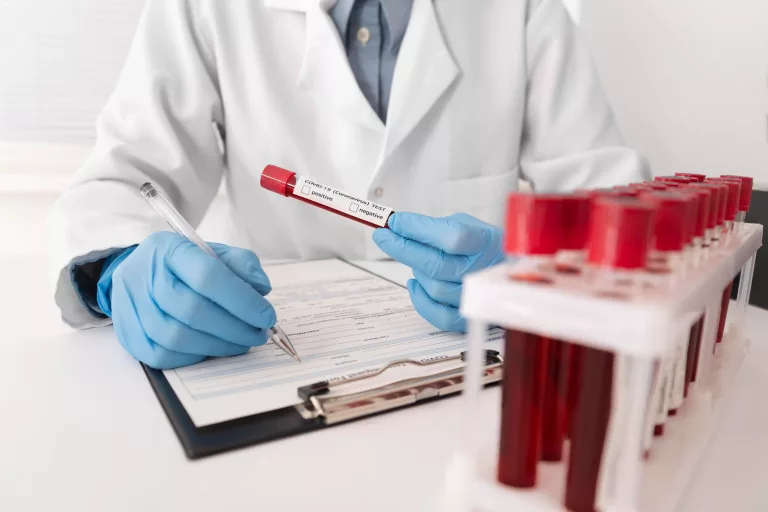
Hemovigilance (HV), designed as a systematic surveillance system encompassing the entire blood supply chain, serves as a robust quality management tool. Its primary objective is to enhance safety and elevate the quality standards throughout the process of blood donation and transfusion, spanning from the blood donor to the recipient of blood and blood components.

Development of Standards & Guidelines
The SBTA (Sindh Blood Transfusion Authority) has formulated minimum licensing standards and provided guidelines for blood establishments to meet these standards. Additionally, the committee has designed template standard operating procedures (SOPs) for blood banks, which establishments can either adopt as-is or customize for the development of their own SOPs.
Blood Safety Data Collection
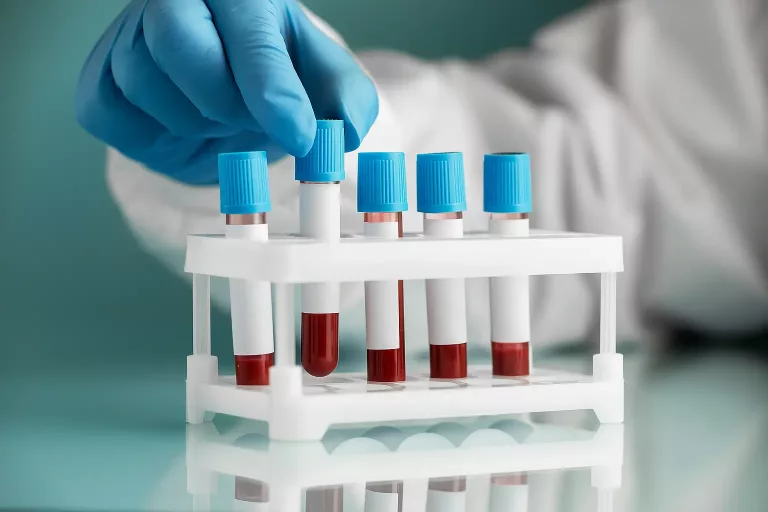
The Authority has established a set of minimum data requirements that must be consistently provided by all blood establishments at regular intervals. This data collection serves dual purposes: firstly, for effective planning; and secondly, for surveillance and estimation of transfusion-transmissible infectious diseases prevalent in Sindh. By systematically gathering this essential information, the Authority aims to enhance its ability to strategically plan and allocate resources while simultaneously monitoring and estimating the prevalence of infectious diseases associated with blood transfusion activities within the region.
District Blood Transfusion Officers
Hemophilia Treatment
Centers in Sindh
Find trusted Hemophilia Treatment Centers near you for expert diagnosis, treatment, and ongoing support ensuring safer lives for those living with bleeding disorders.
Download the SBTA Mobile App
SBTA Mobile App Coming Soon
Find licensed blood banks, track donations, and get instant alerts for urgent blood needs
across Sindh. Stay connected to life-saving care anytime, anywhere.
Download now and support safe, lifesaving blood practices across Sindh.


Registration/Renewal of Licenses
The Authority registers and licenses blood establishments performing any of the processes in the vein-to-vein transfusion chain. To get the new registration or for the renewal of your licenses.
Locate a Blood Bank Near You
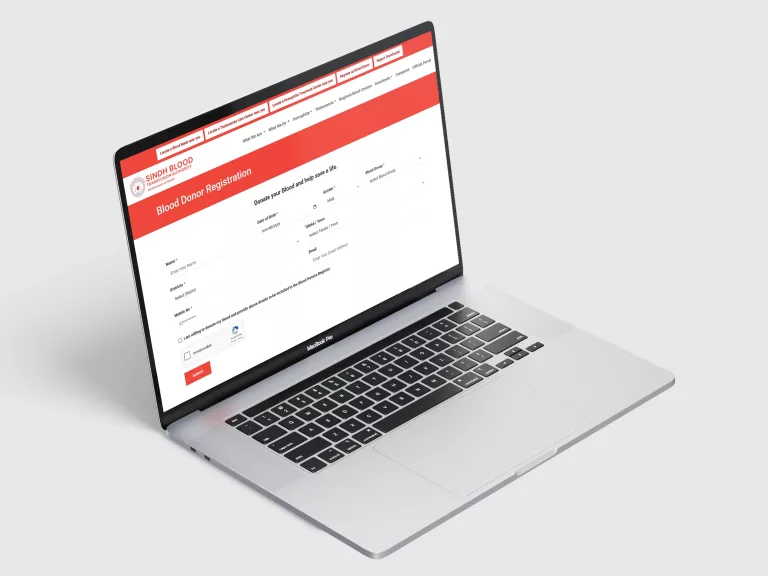
Blood Donor Registration
Frequently Asked Questions
Who can donate blood?
A blood donor must:
- Be in good general health
- Be aged 18 years or older but less than 60 years
- Weigh at least 45 Kg
- Have a hemoglobin level of at least 12.5 g/dl
- Not have donated blood in the last 3 months
Who cannot donate blood?
Blood must not be donated if a person is suffering from any of these conditions:
- Cold/ fever in the past 1 week
- Under treatment with antibiotics or any other medication
- Cardiac problems, hypertension, epilepsy, diabetes (on insulin therapy), history of cancer, chronic kidney or liver disease, bleeding tendencies, venereal disease
- Major surgery in the last 6 months or minor surgery in the past 3 months
- Jaundice or hepatitis or positivity for Hepatitis B or C viruses
- Tooth extraction less than 3 days back or dental surgery less than 1 month back
- Fainting attacks during the last donation
- On therapy with regular blood transfusions
- Sharing needles to inject drugs/ having history of drug addiction
- Sexual relations with different partners or with a high risk individual
- Been tested positive for antibodies to HIV
- Any endocrinal problem
- Females should not donate blood during pregnancy. They can donate after 6 months following delivery and when they are not breast feeding
- Females should not donate blood if they are having heavy menstrual flow or menstrual cramps
- Miscarriage in the last 6 months
How does one make sure that the blood is safe for patients?
Some diseases can be transmitted through blood transfusion. Therefore, all donated blood is screened for transfusion transmissible diseases such as HIV, Hepatitis B, Hepatitis C, Syphilis and Malaria. Even with testing, sometimes infections are not detected, although the rate of detection is extremely good with better methods of testing (e.g. NAT).
How often can I donate blood?
It is safe to donate blood once in every three months.
Why do I have to wait 3 months before donating again?
Since blood contains iron (which is essential for making new red blood cells), donating blood more often than every 3 months causes the body to lose iron faster than it can be made up from iron-containing foods in our diet. As a result the donor could develop iron deficiency anemia, causing him/her to feel weak and tired.
Why is it important to donate blood?
Blood can be a life-saving therapy for patients. One unit of blood can save 4 lives (if it is separated into components). Healthy people should donate blood regularly and voluntarily to overcome shortage of blood for patients. It has been proven worldwide that voluntary donations are the safest of all kinds of donations.
Why are replacement/directed and paid donations not safe?
Replacement donations are donations in which the patient is asked to arrange blood for him/herself. If the blood group of the donor and the patient match, the blood is transfused (directed donations). If they do not match, the blood is stocked and a group-match blood is issued (replacement donations). Replacement donations have a higher rate of transfusion transmissible infections than voluntary donations.
Paid donations are highly unsafe because they are usually given by people for ulterior motives (e.g. drug addicts) and have a very high rate of transfusion transmissible infections.
Even the most sophisticated methods of testing available may fail to detect such infections. Therefore, it is important that voluntary donations by anonymous donors, for altruistic reasons are promoted.
What if I faint during a blood donation?
The likelihood of this happening is minimal. You should eat before donating and drink extra fluids, especially after donation.
News and Events

SBTA, in partnership with NHS, hosted a one-day training session
On December 2nd, 2023, the Sindh Blood Transfusion Authority, in partnership with NHS, hosted a one-day training session focused on quality assurance. This program aimed to drive positive change in
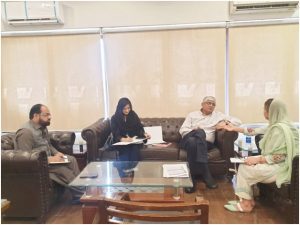
An Official meeting chaired by Honorable Minister of Health with Secretary SBTA
An Official meeting chaired by Honorable Minister of Health with Secretary SBTA, on3rd October, 2023, regarding improving ways to provide safe & healthy blood to the community at large. The
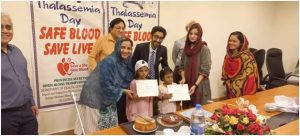
May 8th, International Thalassemia Day 2023, Be Aware. Share. Care
May 8th, International Thalassemia Day 2023, Be Aware. Share. Care: Strengthening education to bridge the thalassemia care gap.